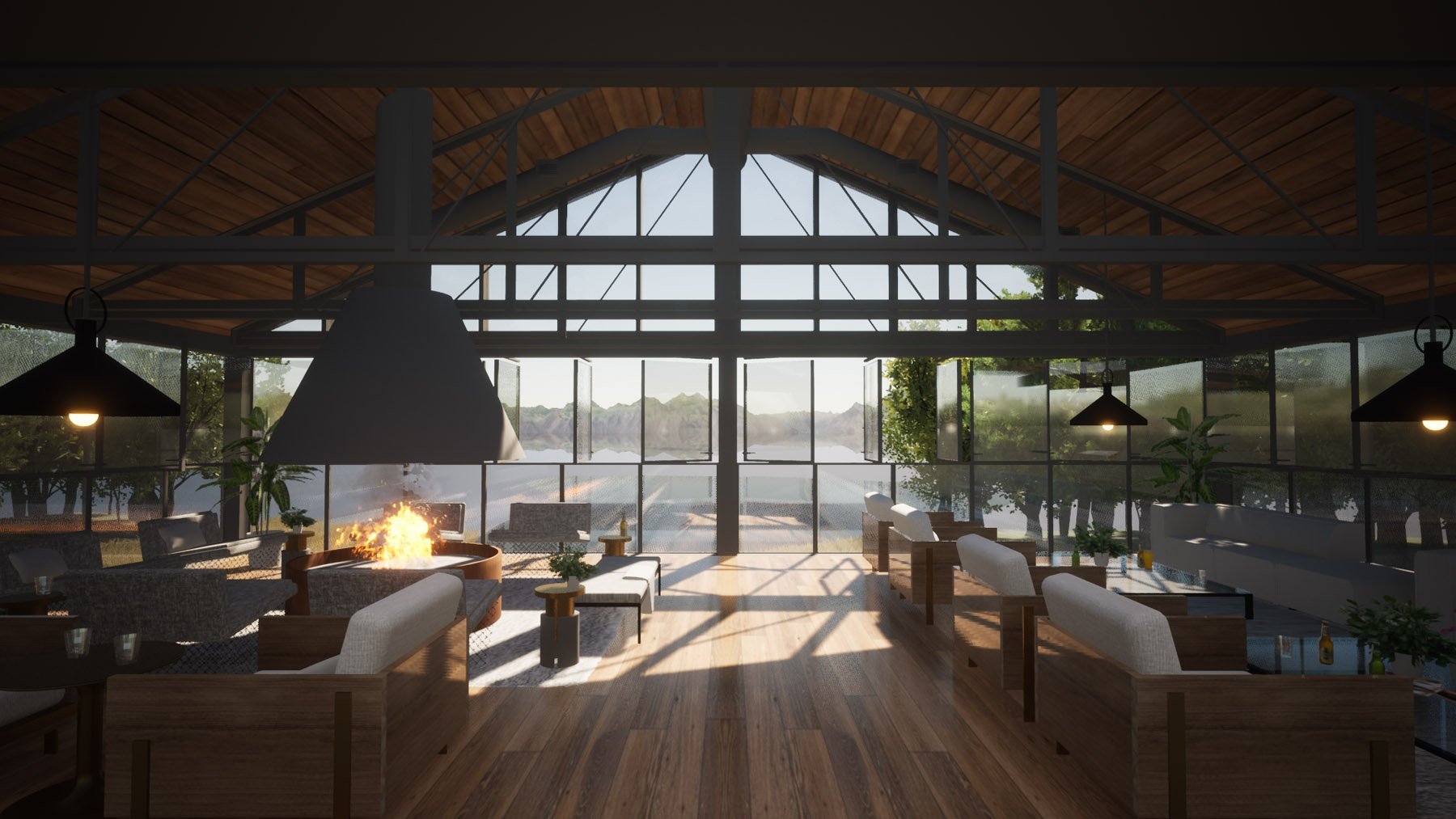

Multi-Family Residential Design: Building Communities
Creating Vibrant Multi-Family Communities in Jacksonville and Northeast Florida
At ZINN, we understand that multi-family residential design transcends individual units—it's about creating communities where residents thrive, developers achieve strong returns, and neighborhoods gain valuable assets. With extensive experience in multi-family projects ranging from boutique townhome developments to large-scale apartment complexes, we bring sophisticated design thinking and practical development expertise to every multi-family project.
Our approach balances the competing demands of multi-family development: creating attractive, functional living spaces that residents love while maintaining construction efficiency and development feasibility that pencils out financially. We understand that successful multi-family projects require both exceptional design and sharp business acumen.
Whether you're a developer planning your next apartment complex, an investor repositioning an existing property, or a builder creating for-sale townhomes or condominiums, ZINN delivers multi-family architecture that attracts residents, maximizes returns, and builds lasting value.
Multi-Family Architecture Services
Garden-Style Apartments & Apartment Communities
Low-rise, garden-style apartments remain popular in Jacksonville's suburban markets, offering residents a balance of density and green space:
Garden-Style Expertise:
2-4 story wood-frame construction (optimal cost efficiency)
Site planning maximizing unit count while preserving open space
Unit mix optimization (studios, 1BR, 2BR, 3BR ratios)
Amenity programming and common area design
Parking strategies (surface, tuck-under, structured)
Phased development planning
We design apartment communities that feel residential rather than institutional. Thoughtful site planning creates variety in building placement, preserves mature trees, and provides residents with attractive views and outdoor access. Our unit layouts maximize efficiency—every square foot contributes to livable, marketable space.
Unit Planning Considerations:
Efficient floor plans minimizing circulation waste
Natural light and cross-ventilation where possible
Adequate storage and closet space
Modern open kitchen and living configurations
Washer/dryer accommodation (in-unit or common facilities)
Balcony or patio access
Sound isolation between units
Jacksonville's apartment market demands competitive rents while maintaining acceptable construction costs. We design to market-rate budgets without sacrificing appeal—selecting durable, attractive materials that minimize maintenance while creating the finishes today's renters expect.
Mid-Rise & High-Rise Multi-Family
Urban infill and high-density sites require vertical solutions:
Mid-Rise Multi-Family (5-8 stories):
Mixed construction types (podium parking with wood-frame above, or all-concrete)
Ground-floor retail or live-work integration
Structured parking solutions
Elevator and corridor efficiency
Urban design and streetscape contribution
High-Rise Residential (8+ stories):
Concrete or steel construction
High-rise building systems (elevators, fire protection, MEP)
Unit sky lobbies and amenity floors
Views and orientation optimization
Rooftop amenity spaces
Jacksonville's urban core and Beach communities increasingly support mid-rise density. These projects require coordination with urban planners, traffic engineers, and utility providers. Our experience navigating Jacksonville's development review process for higher-density projects helps developers move efficiently from concept to approvals.
Townhomes & Attached Housing
Townhomes offer single-family living appeal at multi-family densities:
Townhome Design Specialization:
2-4 story attached or detached townhomes
Private garage and entrance for each unit
Maximizing privacy between units
Rooftop terraces and outdoor space
Urban or suburban townhome configurations
HOA common areas and amenities
We design townhomes that live like single-family homes—each with distinct identity, private outdoor space, and minimal shared walls. Our layouts optimize vertical living: garages on the ground floor, living spaces on the second level capturing natural light, and bedrooms on upper floors.
Townhomes work equally well in urban infill locations (Brooklyn, Riverside, San Marco) and suburban master-planned communities. We adapt architectural style to context—contemporary designs for urban locations, traditional styles for family-oriented suburban neighborhoods.
Condominium Developments
For-sale condominiums require design sophistication meeting individual homeowner expectations:
Condominium Design Considerations:
Varied unit layouts appealing to diverse buyers
High-end finishes and customization options
Amenities befitting ownership (not rental)
Private storage and parking
Building systems supporting individual ownership
Sound isolation critical for resale value
Condominium buyers expect more than apartment renters—higher-quality finishes, more distinctive architecture, superior soundproofing, and resort-quality amenities. We design condominiums that compete with single-family homes, offering convenience, amenities, and lower maintenance without sacrificing quality.
Jacksonville's condominium market concentrates in Beach communities and waterfront locations. We understand local market preferences and design condos that appeal to retirees, second-home buyers, and young professionals seeking turnkey living.
Student Housing
Serving Jacksonville's universities and colleges requires specialized knowledge:
Student Housing Expertise:
Bed-bath optimization (maximizing bed count per unit)
Individual leases by-the-bed (vs. per-unit leases)
Furnished or furniture-ready layouts
Study spaces and group collaboration areas
Extensive amenities (pool, fitness, gaming, study rooms)
Proximity to campus and parking solutions
Student housing operates differently from conventional apartments—students lease individual bedrooms within shared units, requiring lockable bedrooms with private bathrooms. Common areas facilitate social interaction while bedrooms provide privacy.
We've observed successful student housing near UNF (University of North Florida) and downtown near FSCJ (Florida State College at Jacksonville). These projects require understanding student preferences, parent concerns, and investor yield requirements.
Senior Living & Age-Restricted Communities
Florida's aging population creates demand for senior-focused housing:
Senior Housing Design:
Active adult (55+) apartment or villa communities
Independent living with services
Accessibility and universal design features
Community spaces encouraging social interaction
Reduced maintenance for residents
Wellness and fitness amenities
Senior housing design prioritizes accessibility, safety, and community. We design barrier-free units with wider doorways, accessible bathrooms, and open floor plans accommodating mobility aids. Common spaces encourage social engagement—critical for senior wellbeing.
Jacksonville's senior housing concentrates in suburban locations near healthcare, shopping, and cultural amenities. These projects often include clubhouses, fitness centers, pools, and activity programming spaces.
Adaptive Reuse & Repositioning
Converting existing buildings or renovating dated apartment complexes offers opportunities:
Adaptive Reuse Projects:
Converting office buildings to residential
Transforming historic buildings to loft apartments
Repositioning 1970s-80s apartment complexes
Adding amenities to under-amenitized properties
Exterior renovation and rebranding
Jacksonville contains numerous repositioning opportunities—older garden-style apartments needing updates, vacant office buildings suitable for residential conversion, historic warehouses perfect for loft living. We assess feasibility, develop renovation strategies, and create designs that transform tired properties into competitive products.


Multi-Family Development Economics
Construction Costs in Jacksonville
Current (2025) multi-family construction costs in Northeast Florida:
Garden-Style Apartments (wood frame, 2-4 stories):
Basic/value: $140-$180 per SF
Standard Class A: $180-$220 per SF
Premium Class A: $220-$260 per SF
Mid-Rise (5-8 stories, podium or all-concrete):
Standard: $220-$280 per SF
Premium: $280-$350 per SF
High-Rise (8+ stories, concrete/steel):
Standard: $300-$400+ per SF
Luxury: $400-$600+ per SF
Townhomes:
Attached: $160-$220 per SF
Detached: $180-$240 per SF
These costs include site work, buildings, amenities, parking, landscaping, and builder's overhead/profit. Costs fluctuate with material prices, labor availability, and market conditions.
Architectural Fees
Multi-family architectural fees typically range from 3-6% of construction costs, depending on:
Project size (larger projects = lower percentage)
Complexity and custom features
Number of unit types and variations
Phasing and scheduling
Level of interior finish design
Example Fee Ranges:
100-unit garden-style apartments ($18M construction): $540K-$1.08M architectural fees
200-unit mid-rise project ($50M construction): $1.5M-$3M architectural fees
40-unit townhome community ($8M construction): $240K-$480K architectural fees
Fees cover schematic design, design development, construction documents, engineering coordination, permitting support, and construction administration.
Project Timelines
Garden-Style Apartment Community (100-200 units):
Feasibility & entitlements: 2-4 months
Design: 6-9 months
Permitting: 3-6 months
Construction: 14-18 months
Total: 25-37 months from land acquisition to first occupancy
Mid-Rise Multi-Family (150-300 units):
Feasibility & entitlements: 3-6 months
Design: 8-12 months
Permitting: 4-8 months
Construction: 20-30 months
Total: 35-56 months
Townhome Development (30-60 units):
Feasibility & entitlements: 1-3 months
Design: 4-6 months
Permitting: 2-4 months
Construction: 10-16 months (phased delivery)
Total: 17-29 months
These timelines assume normal permitting and no significant delays. Rezoning or extensive environmental review extends timelines substantially.
Frequently Asked Questions
How do you maximize unit count while maintaining quality?
We optimize density through efficient site planning—compact parking layouts, strategic building placement, and thoughtful massing. Unit plans maximize livable space while minimizing circulation waste. The goal is creating attractive, functional units at achievable densities, not cramming in maximum units regardless of livability.
What unit mix should we build?
Unit mix depends on your submarket and target demographic. We research comparable properties analyzing what units rent fastest and at best rates. Generally, 1BR and 2BR units form the core, with studios and 3BR units serving niche demand. We model different unit mixes showing tradeoffs between unit count, construction costs, and projected revenue.
How do we compete with newer properties?
For existing property repositioning, we assess what makes competing properties successful—amenities, unit features, finishes—and develop renovation strategies adding competitive features cost-effectively. Sometimes exterior renovation and amenity additions transform perception. Other times, interior unit upgrades justify rent increases.
What amenities are worth the investment?
Amenity ROI varies by market. Pools, fitness centers, and community spaces are table stakes in Class A properties—you must have them to compete. Premium amenities (outdoor kitchens, resort pools, upscale clubhouses) command rent premiums in strong markets but may not pencil in value-oriented submarkets. We help model amenity investments against projected rent growth.
Can you design for future condo conversion?
Yes. We design unit layouts, building systems, and soundproofing appropriate for ownership. This flexibility allows developers to rental-stabilize initially, then convert to condos later if market conditions favor it. Designing for potential conversion costs slightly more upfront but preserves exit strategy flexibility.
How do you keep projects on budget?
We provide cost estimates at each design phase and work with cost estimators throughout design. If estimates exceed budget, we value-engineer—finding ways to reduce costs while preserving key features and market positioning. Early-stage cost modeling and continuous cost management prevent budget surprises.
What's the approval timeline in Jacksonville?
Standard multi-family projects on properly-zoned land typically permit in 4-6 months. Projects requiring rezoning add 4-8 months. Large developments triggering substantial environmental review or traffic studies may take 12+ months. We provide realistic timeline estimates based on specific project circumstances.
Do you work with national multi-family developers?
Yes. We've worked with both local developers and national multi-family operators. We understand the standards national developers expect and can adapt our process to integrate with corporate development teams, third-party consultants, and standardized product lines while bringing local Jacksonville expertise.
How involved are you during construction?
We provide construction administration services including shop drawing reviews, site observation visits, RFI responses, and progress documentation. Visit frequency depends on project needs—typically bi-weekly for multi-family projects, more frequently during critical construction phases. We're available to answer contractor questions and resolve field conditions throughout construction.
Can you help with branding and marketing materials?
Yes. We provide 3D renderings, site plan graphics, unit plan marketing materials, and amenity visualizations used for pre-leasing and marketing. High-quality renderings help secure financing, pre-lease units, and market the community to prospective residents.
Ready to Discuss Your Multi-Family Project?
Whether you're planning a garden-style apartment community, developing urban townhomes, or repositioning an existing property, ZINN brings the multi-family expertise and local Jacksonville knowledge to help your project succeed.
Contact us today to discuss your development goals. We'll review your site or property, discuss market positioning, and outline how we can help maximize your project's potential.
Tell Us About Your Project | Call: 904.352.1203
Related Services
Commercial Architecture - Retail, office, and mixed-use development
Residential Architecture - Custom homes and renovations
Industrial Architecture - Functional industrial facilities


See why clients trust ZINN Architecture for their projects.
Our Multi-Family Design Process
Phase 1: Feasibility & Programming (2-4 weeks)
Multi-family projects begin with financial feasibility. We work closely with developers to understand:
Market Analysis:
Competing properties and rental rates
Target demographics and unit mix
Amenity expectations in the submarket
Absorption projections and lease-up timeline
Financial Parameters:
Land cost and holding costs
Construction budget (target cost per unit or per SF)
Financing requirements and constraints
Required returns (yield, IRR, equity multiples)
Exit strategy (hold long-term, sell upon stabilization, condo conversion)
Site Analysis:
Allowable density under zoning
Setbacks, height limits, and parking requirements
Topography, drainage, and environmental constraints
Utility capacity and infrastructure needs
Access and traffic impact
We provide preliminary site plans showing achievable unit counts, parking layouts, and building massing. Early-stage cost modeling helps developers understand whether projects are financially viable before investing in detailed design.
Phase 2: Schematic Design (4-8 weeks)
Once feasibility is confirmed, we develop conceptual designs:
Site Planning:
Building placement and orientation
Parking layout (surface, tuck-under, structured)
Amenity locations (pool, clubhouse, courtyards)
Pedestrian circulation and entries
Open space and landscaping concepts
Phasing strategy (if applicable)
Building Design:
Architectural style and material palette
Typical floor plans and unit layouts
Unit mix and unit type stacking
Corridor layouts and vertical circulation
Building systems approach
Amenity Design:
Clubhouse and leasing office layout
Fitness center and community spaces
Pool deck and outdoor amenities
Mail and package receiving
Pet amenities and outdoor spaces
Schematic design establishes the project's overall direction. We typically present multiple site plan options showing different density approaches, building configurations, and amenity placements. Developers can evaluate tradeoffs between unit count, construction cost, and market appeal.
Phase 3: Design Development (6-10 weeks)
With the concept approved, we refine the design:
Detailed Floor Plans:
Finalized unit layouts with exact dimensions
Multiple unit types accommodating unit mix requirements
Efficiency ratios (net-to-gross square footage)
Kitchen, bathroom, and closet configurations
Balcony or patio layouts
Building Systems Coordination:
Structural system (wood frame, steel, concrete)
Mechanical, electrical, and plumbing systems
Fire protection and life safety
Elevator specifications
Energy efficiency and code compliance
Material Selections:
Exterior cladding systems (price/performance balance)
Roofing materials and warranties
Window and door systems
Common area finishes
Unit finishes and appliance packages
Cost Estimating:
Detailed construction cost estimates
Value engineering if over budget
Phasing cost implications
Site work and infrastructure costs
Design development produces a comprehensive package ready for contractor bidding or guaranteed maximum price (GMP) negotiation.
Phase 4: Construction Documents (8-16 weeks)
Construction documents are the detailed blueprints for building the project:
Comprehensive architectural plans (50-150+ sheets depending on project size)
Civil engineering (site grading, utilities, drainage)
Structural engineering drawings
MEP (mechanical, electrical, plumbing) engineering drawings
Landscape architecture plans
Specifications detailing materials and installation
Multi-family construction documents require coordination among multiple engineering disciplines. We lead coordination efforts, ensuring all systems work together efficiently and are properly documented.
Phase 5: Permitting & Approvals (3-6 months, highly variable)
Multi-family projects face extensive review processes:
Government Approvals:
Zoning approvals or rezoning (if required)
Development of Regional Impact (DRI) review for large projects
Concurrency determination (traffic, utilities, services)
Environmental permits (wetlands, stormwater, tree removal)
Building permits from local jurisdiction
Fire marshal and life safety approvals
Utility Coordination:
Water and sewer capacity and connection
Electric, gas, cable, internet service coordination
Stormwater management approvals
Impact fees and capacity charges
Other Approvals:
Homeowners Association review (if applicable)
Historic preservation (if in historic district)
Airport or FAA review (if in flight path)
Jacksonville multi-family permitting typically takes 4-6 months for straightforward projects, longer for complex developments requiring rezoning or extensive environmental review. Our experience helps developers navigate these processes efficiently.
Phase 6: Construction Administration
During construction, we support the development team:
Pre-construction meetings and constructability reviews
Regular site observation visits
Reviewing contractor RFIs (Requests for Information)
Shop drawing and submittal reviews
Material mock-ups and sample approvals
Construction progress documentation
Punch list development
Certificate of Occupancy coordination
Multi-family construction typically takes 12-24 months depending on project size, construction type, and phasing. We remain engaged throughout construction, helping resolve field conditions and ensuring quality execution.
Frequently Asked Questions
How do you maximize unit count while maintaining quality?
We optimize density through efficient site planning—compact parking layouts, strategic building placement, and thoughtful massing. Unit plans maximize livable space while minimizing circulation waste. The goal is creating attractive, functional units at achievable densities, not cramming in maximum units regardless of livability.
What unit mix should we build?
Unit mix depends on your submarket and target demographic. We research comparable properties analyzing what units rent fastest and at best rates. Generally, 1BR and 2BR units form the core, with studios and 3BR units serving niche demand. We model different unit mixes showing tradeoffs between unit count, construction costs, and projected revenue.
How do we compete with newer properties?
For existing property repositioning, we assess what makes competing properties successful—amenities, unit features, finishes—and develop renovation strategies adding competitive features cost-effectively. Sometimes exterior renovation and amenity additions transform perception. Other times, interior unit upgrades justify rent increases.
What amenities are worth the investment?
Amenity ROI varies by market. Pools, fitness centers, and community spaces are table stakes in Class A properties—you must have them to compete. Premium amenities (outdoor kitchens, resort pools, upscale clubhouses) command rent premiums in strong markets but may not pencil in value-oriented submarkets. We help model amenity investments against projected rent growth.
Can you design for future condo conversion?
Yes. We design unit layouts, building systems, and soundproofing appropriate for ownership. This flexibility allows developers to rental-stabilize initially, then convert to condos later if market conditions favor it. Designing for potential conversion costs slightly more upfront but preserves exit strategy flexibility.
How do you keep projects on budget?
We provide cost estimates at each design phase and work with cost estimators throughout design. If estimates exceed budget, we value-engineer—finding ways to reduce costs while preserving key features and market positioning. Early-stage cost modeling and continuous cost management prevent budget surprises.
What's the approval timeline in Jacksonville?
Standard multi-family projects on properly-zoned land typically permit in 4-6 months. Projects requiring rezoning add 4-8 months. Large developments triggering substantial environmental review or traffic studies may take 12+ months. We provide realistic timeline estimates based on specific project circumstances.
Do you work with national multi-family developers?
Yes. We've worked with both local developers and national multi-family operators. We understand the standards national developers expect and can adapt our process to integrate with corporate development teams, third-party consultants, and standardized product lines while bringing local Jacksonville expertise.
How involved are you during construction?
We provide construction administration services including shop drawing reviews, site observation visits, RFI responses, and progress documentation. Visit frequency depends on project needs—typically bi-weekly for multi-family projects, more frequently during critical construction phases. We're available to answer contractor questions and resolve field conditions throughout construction.
Can you help with branding and marketing materials?
Yes. We provide 3D renderings, site plan graphics, unit plan marketing materials, and amenity visualizations used for pre-leasing and marketing. High-quality renderings help secure financing, pre-lease units, and market the community to prospective residents.
Ready to Discuss Your Multi-Family Project?
Whether you're planning a garden-style apartment community, developing urban townhomes, or repositioning an existing property, ZINN brings the multi-family expertise and local Jacksonville knowledge to help your project succeed.
Contact us today to discuss your development goals. We'll review your site or property, discuss market positioning, and outline how we can help maximize your project's potential.
Tell Us About Your Project | Call: 904.352.1203
Related Services
Commercial Architecture - Retail, office, and mixed-use development
Residential Architecture - Custom homes and renovations
Industrial Architecture - Functional industrial facilities